
Login
Log in if you have an account
Register
By creating an account with our store, you will be able to move through the checkout process faster, store multiple addresses, view and track your orders in your account, and more.
Create an accountA guide to our steel materials
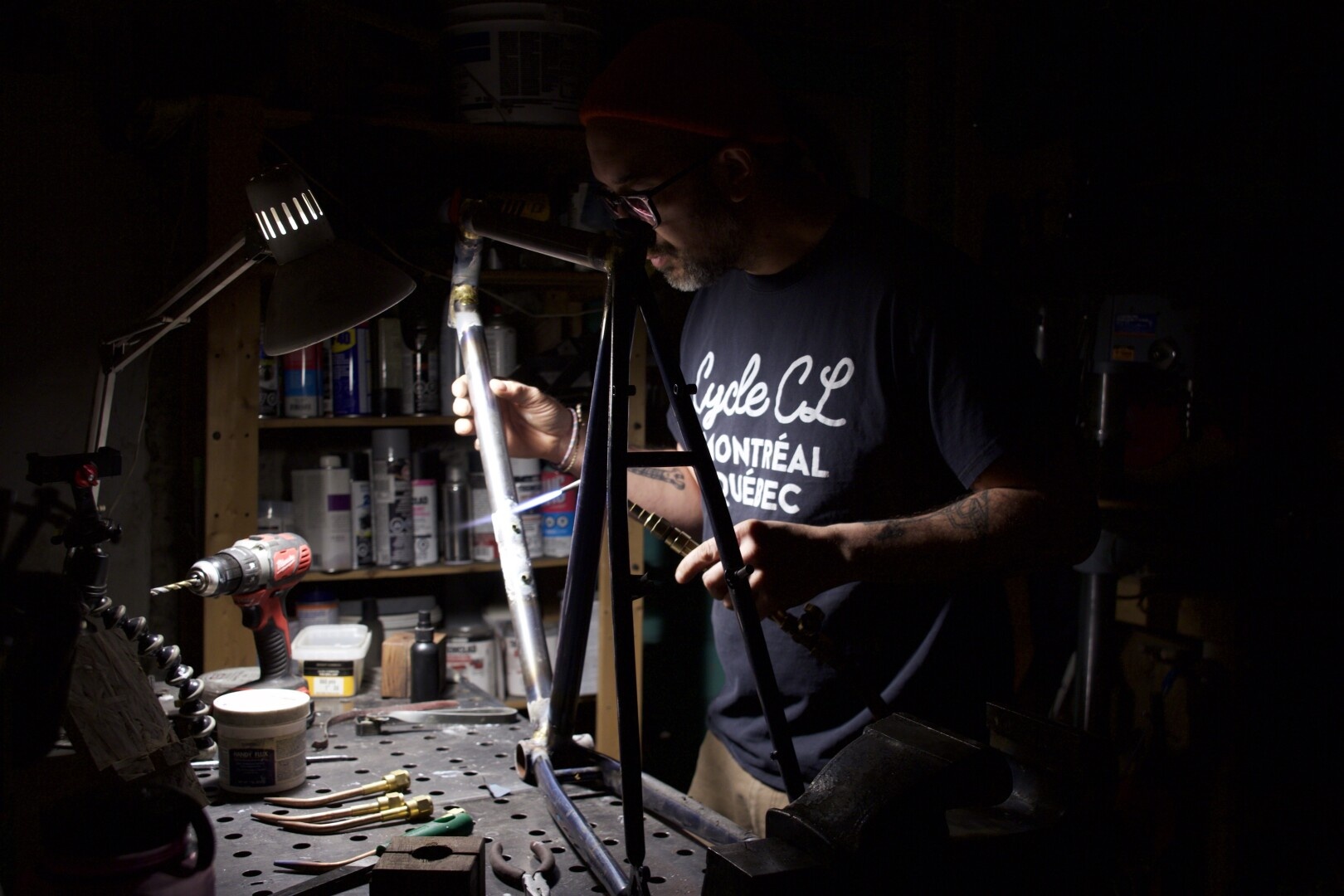

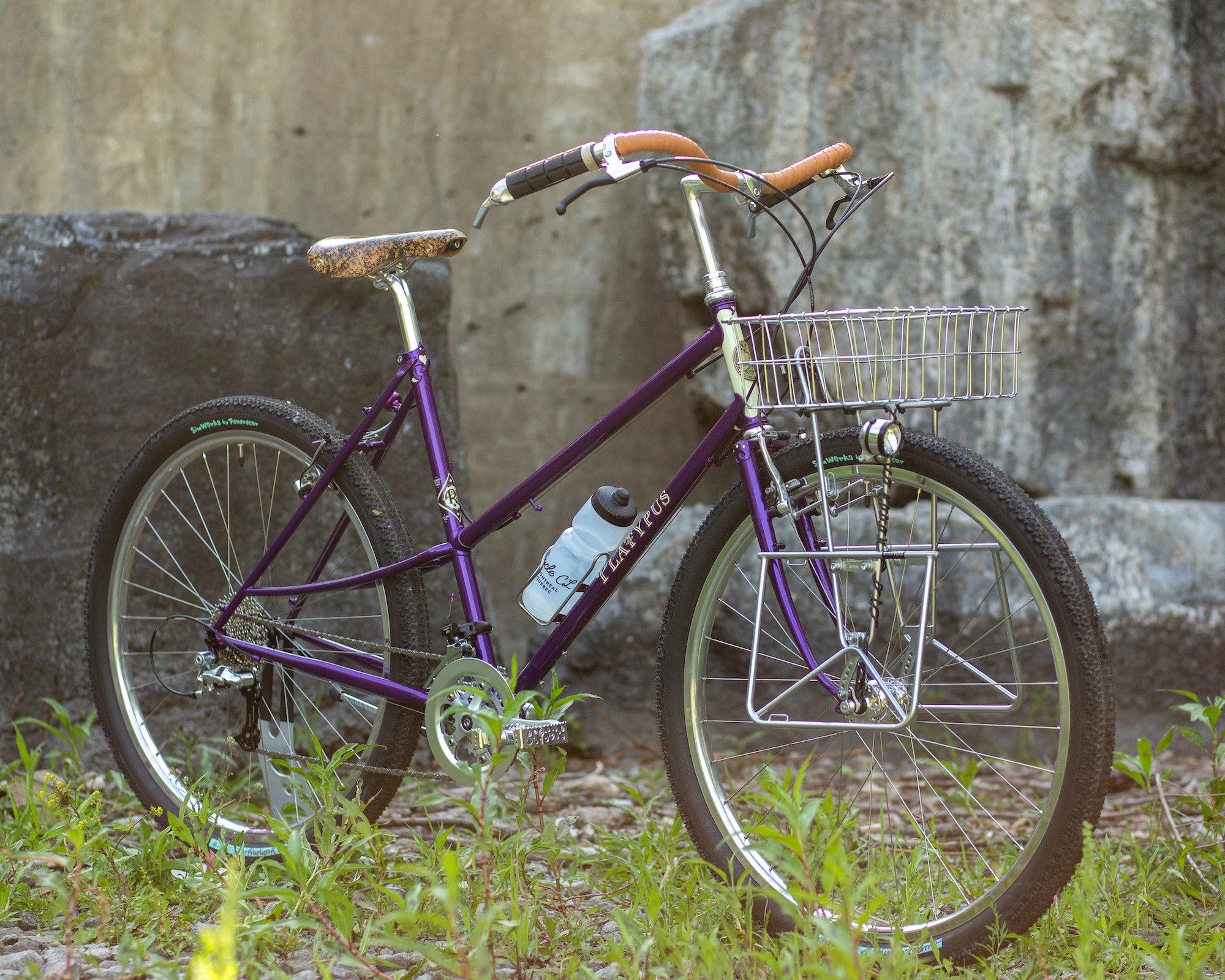
Before
Given that one of our long-term interests at C&L is in keeping quality, interesting bicycles in the world, we’ve kept in touch with a lot of people in the frame building and repair world. Whether it’s having the local blacksmith repair an eyelet on one of our personal bikes, or asking the award-winning three-person framebuilding company to make a run of peculiar custom frames, it’s always been interesting working with our friends who know how to make stuff!
Eventually we came to the point where we saw that we could bring together two worlds, using our contacts in the steel manufacturing industry in Taiwan, to turn C&L into a convenient and, more importantly, local source for raw steel products for bicycle frames. As it’s become more difficult (it was always more expensive) to work with US-based suppliers, our on-hand steel has been appreciated all over the country and it’s encouraged us to expand what we can offer.

After
If you’re a professional framebuilder you probably don’t need this breakdown, but it’s good info for everybody, and even if you never intend to weld a single piece of metal to another, it’s still interesting to see what goes into your bike frame!
First off are the main tubes, forming the front triangle of the bike. These are the most complex ones to make. We sell tubes made of 4130 CrMo steel, a specific high-strength alloy that’s ideally suited to bicycles, since you can make them quite thin while keeping them strong enough to support a whole person. There are even fancier, recently-developed alloys of steel which you might know by brand names, and these can be useful when building frames intended for more demanding or specific applications. Those are often heat-treated and require special handling or techniques while welding them, to achieve even higher strength.
The main tubes are thinner in the middle section, and thicker at their ends where they’ll be joined to other tubes. This is done by forming the tubes on a mandrel and drawing them out with massive forces, which results in the strongest possible tube without a welding seam which might weaken the part. Steel bike tubes are really fancy it turns out! This makes the tube “swaged” or as it’s commonly called “butted”: a double-butted tube has a thicker butt at both ends, and is swaged in the middle. Triple-butted is a bit of a misnomer but it means the two ends are different thicknesses, usually for a seat tube.
Traditional road bike frames were made from pretty small tubes, with 25.4mm and 28.6mm tubes being common, the smaller one being the top tube which is less stressed. These days it’s much more common to see 28.6 and 31.8mm tubes, and often 34.9mm tubes, the latter mostly seat tubes for ATBs. A larger diameter tube is more rigid than the equivalent wall-width on a smaller diameter.
Our seamless double butted toptubes and downtubes come in 25.4, 28.6, 31.8, and a few 34.9mm outer diameters, in a few lengths which can be cut to the right length. For seat tubes, we’ve got 34.9mm with a 1.6mm butt thickness at one end, and 1.0mm thickness on the rest (stout!) and 28.6mm thickened to 29.8 at the top, with thicknesses of 1.2, 0.6 and 0.9mm - that’s a triple-butted tube (three thicknesses). That 0.6mm minimum thickness on all our tubes is really thin, but it’s not as ultra-flexy super-light as you’ll find on some fancy custom road bikes. Partly that’s ‘cause it’s expensive to make the thinner stuff, and also because for a practical bike which you’ll be using often, thinner tubes are inconvenient: they’re easier to dent.

Head tubes. No fancy thin-walled steel here!
The head tube is also important but that one’s always quite a thick tube. It’s really short so that doesn’t add much weight to the total frame, and it needs to be thick because it’ll have the other tubes welded to it, as well as holding the headset cups and working with the fork steerer (also now available!). We’ve got 34mm and 44mm headtubes (inner diameters), for threadless headsets. Ironically we’re not yet set up to provide the parts for threaded-fork frames (30mm tubes and threaded fork steerers).


Other parts of the front triangle are potentially lugs, fancy-shaped sockets that can hold the tubes together: head lugs, bottom bracket lugs, and seat cluster lugs. Those are for bronze-welding the tubes into, a very traditional way of building a frame. These are the first parts we’re seeing in this overview which are cast: wax is formed into the shape of the part, then a sand mold is made around the wax. The wax gets burnt off (“lost wax”) and then molten steel is poured into the now-empty mold. The result is extremely precisely-shaped, complex parts with a very good finish, requiring relatively little filing or polishing. Our lugs, as well as other complex parts like dropouts and fork crowns, are made by one of the world’s top lost-wax casting factories. You’ve definitely seen their castings on many, many bicycles.


Speaking of dropouts, the rear ones are joined to the front triangle by the rear triangle! That’s the seat stays and chain stays, going from the rear hub to the seat-tube/top-tube joint and to the bottom bracket, respectively. Often those tubes aren’t as complex an internal profile as the main tubes, though they can be. A more straightforward, though still drawn seamless, straight-profile tube is often used. The same is true of the fork blades, where a straight-profile tube can be ovalized and gently curved to form the fork blades. They’ll join the steerer tube using a fork crown (another fancy complicated casting) and have cast dropouts at the other end for the front wheel. Often, however, blades for a rim-brake fork meant to be lightweight will taper from a larger top to a much smaller end.

Steel tubes joined with molten bronze - this example is a bronze fillet rather than a lug
If you’ve joined all these parts together (using bronze or silver brazing filler, or TIG-welding them) you now have a bare frame and fork. Most of the time that frame will need to have more bits welded to it: disc or cantilever brake mounts, bridges, cable guides, rack or fender eyelets, water bottle eyelets with optional reinforcements, kickstand plates, a front derailer braze-on, or even a casting made for splitting the frame to accommodate a belt drive.
After all that frame steel, we’re not even done… some of it is for making custom parts and accessories. The 25.4mm and 22.2mm tubing can make handlebars with a bit of bending, and the 10mm tubing is for building custom racks.
What a lovely walk around a bike frame that’s been! Given how many ways of building a bicycle we’ve seen, I’m sure we’ll never have everything someone could need for every frame, but we’re constantly growing the breadth of what we offer framebuilders from one year to the next, because we love seeing people build and repair and modify their beautiful machines.
Leave a comment
Recent articles
View all
A recap of our small Toronto visit
The story of the Allotec A32